

5 Trigger Finger Exercises for Faster Recovery in Tarzana & Los Angeles

Updated: Aug 18

A finger that catches, clicks, or locks can quickly turn routine activities into frustrating ones. Typing emails, gripping a coffee mug, carrying groceries, or holding a golf club may suddenly feel awkward or uncomfortable. If these symptoms sound familiar, trigger finger exercises may help improve flexibility, reduce stiffness, and support healthy finger movement as part of a conservative treatment plan.
Home exercises are not a cure for every case of trigger finger, but they can play an important role during recovery for many people. Knowing which exercises are appropriate, how to perform them safely, and when to see a hand specialist can help you protect your hand function and avoid worsening symptoms.
At Foundation Hand Surgery Institute, our board-certified orthopedic hand surgeons focus exclusively on conditions affecting the hand and upper extremity. We care for patients throughout Tarzana, the San Fernando Valley, the West Valley, and West Los Angeles with personalized treatment plans tailored to their symptoms, work demands, hobbies, and recovery goals.
What You'll Learn From This Article
What trigger finger is and why it causes clicking, catching, or locking.
Five gentle exercises that may help maintain finger mobility.
How to perform each exercise safely without increasing irritation.
Daily habits that can support recovery alongside home exercises.
Signs that it may be time to see a hand specialist.
Treatment options available if exercises are not enough.
Understanding Trigger Finger Before You Begin Exercising

Before starting any exercise routine, it helps to understand what is happening inside your finger and why these movements may be beneficial.
Trigger finger, medically known as stenosing tenosynovitis, develops when one of the flexor tendons cannot move smoothly through its protective sheath. Normally, the tendon glides easily each time you bend or straighten your finger. When the tendon or its surrounding sheath becomes irritated and thickened, that smooth movement becomes restricted. As a result, the finger may click, catch, or temporarily lock during motion.
Common symptoms include:
Pain or tenderness near the knuckle at the base of the finger
Morning stiffness that improves with gentle movement
A clicking or popping sensation during motion
Difficulty fully straightening the affected finger
A finger that catches during bending or straightening
A finger that occasionally locks and requires the opposite hand to return it to a straight position
Although trigger finger can affect any digit, it most commonly involves the thumb, ring finger, or middle finger. It frequently develops in people whose daily activities involve repetitive gripping, squeezing, or forceful hand use.
Office professionals, healthcare workers, mechanics, tradespeople, musicians, gardeners, golfers, and active retirees often notice symptoms because dependable hand function is essential to both work and everyday life.
The good news is that not every case requires surgery. For many people with mild to moderate symptoms, conservative treatment is the appropriate first step, and gentle exercises may become one part of that plan.
The next step is understanding what exercises can realistically accomplish and where their limits begin.
Can Trigger Finger Exercises Help?
Gentle exercises are often recommended as part of conservative care because they can help maintain mobility, reduce stiffness, and encourage smoother tendon movement. While they may not resolve every case of trigger finger, they can support recovery when combined with activity modification and other treatments recommended by your healthcare provider.
These exercises help keep the finger moving through a comfortable range of motion, which may reduce stiffness and make everyday tasks easier.
According to the Mayo Clinic, conservative treatment for trigger finger may include resting the hand, avoiding repetitive gripping, wearing a splint, performing gentle stretching exercises, or receiving a corticosteroid injection when symptoms persist. Surgery is generally considered when conservative measures no longer provide adequate relief or when the finger remains locked.
Trigger finger exercises may help:
Maintain flexibility of the affected tendon
Improve the tendon's ability to glide through its sheath
Reduce stiffness, especially after periods of rest
Support hand function during recovery
Complement rehabilitation recommended by a healthcare professional
Results vary from person to person. Factors such as how long symptoms have been present, the severity of tendon irritation, underlying medical conditions such as diabetes, and the physical demands placed on your hands all influence recovery.
It is also important to recognize when exercise alone is unlikely to be enough. A finger that locks frequently, cannot fully straighten, or continues to interfere with daily activities may require additional treatment from an orthopedic hand specialist.
Understanding how to perform these movements correctly is just as important as choosing the right exercises.
How to Perform These Exercises Safely
Good technique helps you get the most benefit from trigger finger exercises while reducing the chance of making symptoms worse. Every movement should feel controlled and comfortable. The objective is to encourage normal motion, not to push through pain.
Before beginning any exercise session:
Rest your forearm on a comfortable surface.
Keep your wrist in a neutral position whenever possible.
Begin with slow, controlled movements.
Stop before you experience sharp pain.
Return to the starting position after every repetition.
Avoid snapping or forcefully straightening a locked finger.
For many people, performing approximately five gentle repetitions of each exercise once or twice daily is a reasonable starting point. Your orthopedic surgeon, hand therapist, or healthcare professional may recommend a different routine depending on your symptoms and treatment plan.
If you notice increased swelling, more frequent locking, worsening pain, or reduced movement after exercising, stop the routine and contact your healthcare provider. Exercises should support recovery, not increase irritation.
Once you understand the basics, you can begin with a series of simple movements designed to improve flexibility and maintain healthy tendon motion.
Five Trigger Finger Exercises to Support Recovery
These exercises progress from gentle mobility work to light strengthening. Move slowly, breathe normally, and avoid forcing any movement that causes significant discomfort.
1. Assisted Finger Extension Stretch

This simple stretch helps improve your ability to straighten an affected finger without placing excessive stress on the tendon.
How to perform it
Rest your forearm comfortably on a table.
Keep your wrist relaxed.
Use your opposite hand to gently support the affected finger.
Slowly guide the finger from a slightly bent position toward a comfortable straight position.
Hold the stretch for three to five seconds.
Return to the starting position.
Repeat five times.
You should feel only a gentle stretch. If the finger catches or locks during the movement, avoid forcing it into a fully extended position.
Why it may help
This exercise helps maintain flexibility while encouraging controlled movement through the available range of motion. It may be especially helpful for morning stiffness.
2. Tendon Glide Exercise
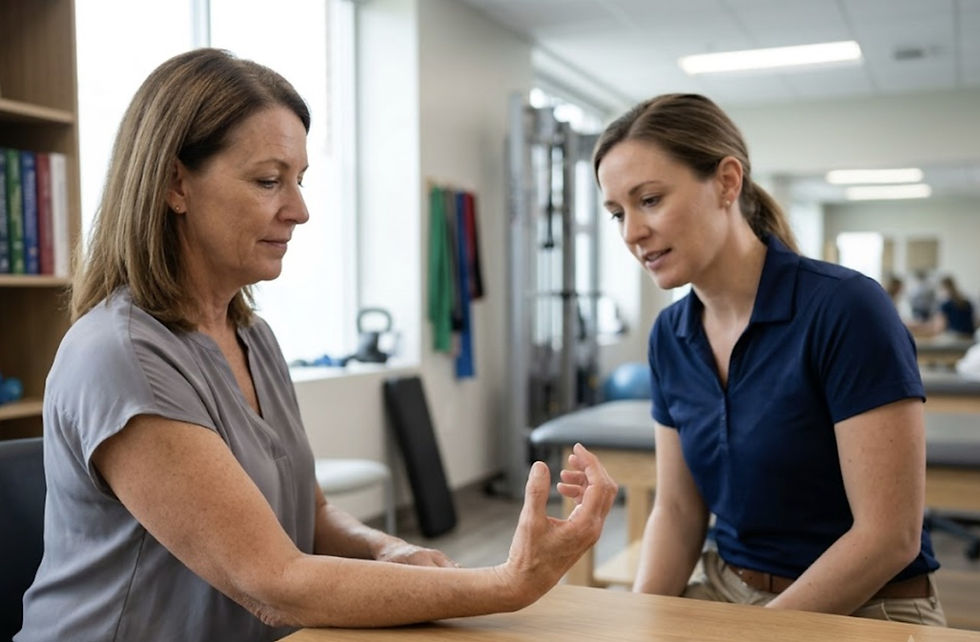
Tendon glide exercises move the flexor tendon through several positions to help maintain coordinated finger movement.
How to perform it
Begin with your fingers fully extended.
Bend the middle and end joints into a gentle hook position.
Slowly curl your fingers into a loose fist.
Open your hand completely.
Spread your fingers comfortably.
Return to the starting position.
Repeat the sequence five times using slow, smooth movements.
Why it may help
Moving through several hand positions encourages the tendon to glide naturally within its sheath while maintaining flexibility throughout the finger and thumb.
Avoid making a tight fist or squeezing forcefully if these movements increase discomfort.
3. Fingertip to Palm Exercise

This exercise focuses on controlled bending and straightening that closely matches everyday hand movements.
How to perform it
Place your hand on a flat surface or hold it comfortably in front of you.
Begin with your fingers straight.
Slowly bend the affected finger until the fingertip moves toward your palm.
Pause briefly.
Slowly straighten the finger.
Return to the starting position.
Repeat five gentle repetitions.
Why it may help
This exercise practices the same motion you use when holding utensils, typing, gripping a steering wheel, or carrying household items. It helps maintain mobility without placing excessive stress on the tendon.
If you notice painful catching while bending the finger, reduce the range of motion rather than pushing through it.
4. Finger Spreading With a Rubber Band

Once basic finger movement becomes more comfortable, light resistance may help strengthen the muscles that open and stabilize the hand.
How to perform it
Place a light rubber band around your fingers near the fingertips.
Keep your fingers together.
Slowly spread your fingers apart against the resistance.
Hold for two to three seconds.
Slowly return to the starting position.
Complete five repetitions.
Why it may help
Unlike gripping exercises, this movement strengthens the muscles that open the hand. Better balance between the muscles that close and open the fingers may support overall hand function during rehabilitation.
Skip this exercise if the resistance increases locking or causes pain around the knuckle.
5. Gentle Soft Grip Exercise
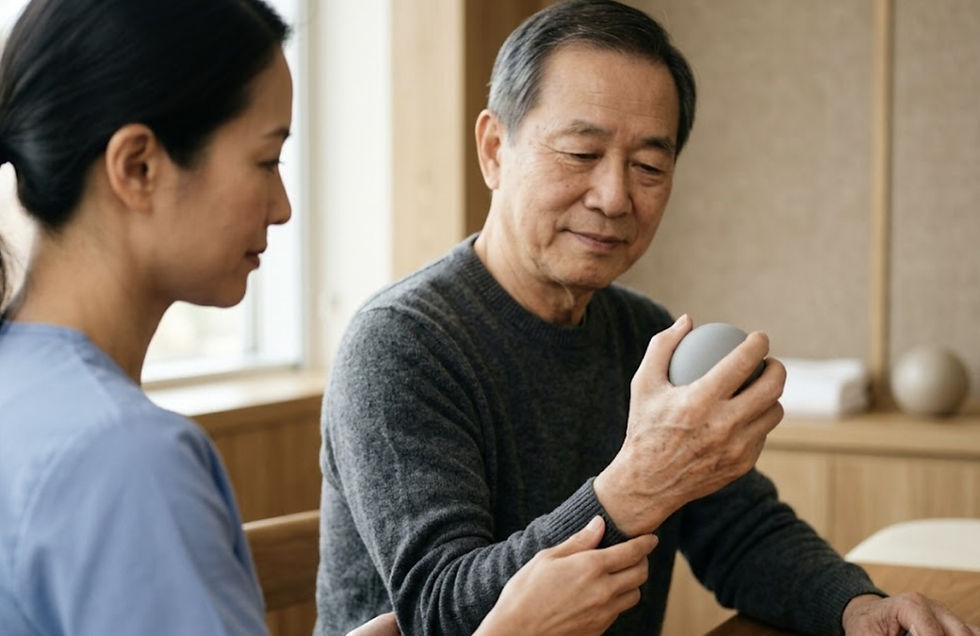
Grip strengthening should usually come later in recovery, once painful catching has improved.
How to perform it
Hold a soft sponge, folded towel, or therapy ball.
Keep your wrist in a neutral position.
Gently squeeze using light pressure.
Hold for two to three seconds.
Slowly release until your fingers are fully relaxed.
Repeat five times.
Why it may help
Light strengthening can help restore grip strength once symptoms begin to improve. The emphasis should remain on smooth, controlled movement rather than squeezing as hard as possible.
Avoid this exercise if gripping continues to trigger painful locking or significant stiffness.
Exercises are only one part of recovery. The way you use your hands throughout the day can have just as much influence on how your symptoms respond.
Daily Habits That Can Support Trigger Finger Recovery
Exercises may help maintain movement, but your daily hand use also matters. Repeated gripping, squeezing, and prolonged pressure can continue to irritate the affected tendon, even when you perform the exercises correctly.
Small adjustments can reduce strain without forcing you to stop every activity.
Daily adjustment | Why it may help |
Reduce repetitive gripping | Gives the tendon and sheath more time to settle |
Take short breaks during hand-intensive tasks | Limits repeated irritation throughout the day |
Use tools with wider or padded handles | Decreases the amount of grip strength required |
Keep your wrist in a neutral position | Reduces unnecessary tension during typing, driving, and tool use |
Avoid repeatedly testing the finger | Frequent bending and snapping can increase irritation |
Wear a splint if recommended | May limit movement that aggravates symptoms |
Return to sports or hobbies gradually | Helps you identify which activities still cause catching |
For office and technology professionals, this may mean adjusting your keyboard position, alternating between tasks, or reducing prolonged phone use. Healthcare workers, tradespeople, technicians, musicians, and caregivers may need to modify how they hold tools or complete repetitive tasks.
A splint may help keep the affected finger in a straighter position, particularly at night. However, wearing a splint for too long without guidance may increase stiffness. A healthcare professional can help determine how often you should wear it and whether it is appropriate for your condition.
Some people use ibuprofen or another anti-inflammatory medication to relieve pain. These medications may reduce discomfort, but they do not correct restricted tendon glide. They may also be unsuitable for people with certain stomach, kidney, bleeding, allergy, or medication-related concerns.
Important note: Check with your medical provider before starting a new medication.
These changes can support recovery, but persistent locking often signals that home care has reached its limit.
Signs That Trigger Finger Exercises May Not Be Enough
Mild stiffness may respond to changes in activity and gentle exercises. More advanced symptoms often need a focused medical evaluation.
Consider seeing a hand specialist if:
The affected finger locks repeatedly in a bent position
You need your opposite hand to straighten the finger
Pain or tenderness near the base of the finger is getting worse
You cannot fully bend or straighten the finger
Your grip strength continues to decline
Symptoms interfere with sleep, work, driving, exercise, or personal care
More than one finger or thumb is affected
Exercises and rest have not produced meaningful improvement
The finger becomes noticeably swollen, red, or warm
Symptoms began after a hand injury
People with diabetes, rheumatoid arthritis, thyroid disorders, or other health conditions that can affect tendons may also benefit from earlier evaluation. These conditions can influence treatment response and the recommended care plan.
Trigger finger can resemble other hand problems, including arthritis, a tendon injury, Dupuytren's contracture, or certain nerve disorders. A physical examination helps identify the source of the catching and prevents you from treating the wrong problem.
The American Academy of Orthopedic Surgeons notes that a clinician can usually diagnose trigger finger by reviewing symptoms and examining the affected tendon's movement. Imaging is not always necessary.
Once the diagnosis is clear, treatment can be matched to the severity of the condition and the demands you place on your hands.
Treatment Options Beyond Home Exercises

Seeing a hand specialist does not automatically mean you need surgery. Many patients begin with conservative treatment, especially when the finger still moves, and symptoms have not become severe.
Your evaluation may include a discussion of when symptoms began, which activities trigger locking, and how the problem affects your work or daily responsibilities. The specialist will also examine the affected finger, feel for tenderness or thickening near the tendon sheath, and observe how the finger bends and straightens.
Treatment recommendations may include:
Reducing or modifying aggravating activities
Wearing a splint for a specific period
Working with a hand therapist
Following a personalized rehabilitation plan
Using medication for short-term symptom control when appropriate
Receiving a corticosteroid injection
Considering trigger finger release surgery if conservative care does not provide enough improvement
Steroid injections can reduce inflammation around the tendon sheath and may improve movement for some patients. Results vary, and some people may need additional treatment. Medical conditions such as diabetes can also affect how well an injection works.
Surgery may be considered when the finger remains locked, symptoms continue despite conservative care, or daily function becomes significantly limited. During trigger finger release, the surgeon opens the restricted portion of the sheath so the tendon can glide more freely. Recovery time and activity restrictions vary according to the procedure, the finger involved, and the patient’s overall health.
The National Center for Biotechnology Information describes treatment as a progression that may include splinting, steroid injections, and surgical release, depending on symptom severity and response to previous care.
At Foundation Hand Surgery Institute, treatment decisions reflect more than the diagnosis alone. Our board-certified orthopedic surgeons focus exclusively on the hand and upper extremity. They consider your work, family responsibilities, sports, hobbies, and concerns about downtime before recommending a plan.
For patients who have already received a diagnosis or surgical recommendation elsewhere, a second opinion can provide additional clarity. The goal is to help you understand the condition, compare your options, and choose the next step with realistic expectations.
Access to focused care close to home can make that process easier for patients throughout Tarzana and Los Angeles.
Personalized Trigger Finger Care in Tarzana and Los Angeles

Choosing the right treatment starts with an accurate diagnosis. Trigger finger can range from mild stiffness that responds to conservative care to persistent locking that affects work, hobbies, and everyday activities. Knowing where your symptoms fall on that spectrum helps guide the next step.
Foundation Hand Surgery Institute provides specialized care for patients throughout Tarzana, the San Fernando Valley, West Valley, and West Los Angeles. Our board-certified orthopedic surgeons dedicate their practice exclusively to conditions affecting the hand and upper extremity, allowing every evaluation to focus on restoring comfortable, reliable hand function.
When you visit our practice, your care plan is built around more than your diagnosis. We take time to understand:
When your symptoms began
Which finger or thumb is affected
The activities that make symptoms worse
Your occupation and daily hand demands
Sports, hobbies, and recreational activities
Previous treatments you have already tried
Your personal goals for recovery
That information helps us recommend treatment that fits your lifestyle. Some patients improve with activity modification, splinting, rehabilitation, or a steroid injection. Others benefit from surgical treatment after conservative options have been exhausted.
Our goal is to explain every option in plain language, answer your questions, and help you make an informed decision without unnecessary pressure.
If your finger continues to catch, lock, or interfere with daily life despite home care, an evaluation by a hand specialist can provide the clarity needed to move forward.
Frequently Asked Questions
1. Can trigger finger exercises cure trigger finger?
Trigger finger exercises may improve flexibility, maintain tendon movement, and reduce stiffness in mild cases, but they do not cure every cause of trigger finger. If symptoms persist or the finger frequently locks, additional treatment, such as splinting, corticosteroid injections, or surgery, may be recommended.
2. How often should I perform trigger finger exercises?
Many people begin with five gentle repetitions of each exercise once or twice a day. The ideal routine depends on your symptoms, overall hand function, and treatment plan. Your hand specialist or therapist may recommend a different schedule based on your individual needs.
3. Should I keep exercising if my finger locks?
No. Exercises should never require you to force a locked finger to straighten. If locking becomes more frequent, pain increases, or the finger remains bent, stop the exercises and schedule a medical evaluation.
4. Are grip strengthening exercises safe during trigger finger recovery?
Grip strengthening is usually introduced after painful catching begins to improve. Forceful squeezing too early can increase irritation of the tendon. Gentle strengthening should only be added when movement becomes comfortable or when recommended by your healthcare provider.
5. When should I see a hand specialist instead of continuing home exercises?
You should consider an evaluation if your symptoms persist despite home care, your grip strength decreases, the affected finger repeatedly locks, more than one finger is involved, or your symptoms interfere with work, hobbies, sleep, or everyday activities. Early evaluation can help identify the most appropriate treatment before symptoms become more limiting.
Conclusion
Gentle trigger finger exercises can be a valuable part of recovery for many people. They may help maintain flexibility, improve tendon glide, and reduce stiffness when performed correctly and combined with appropriate activity modification.
At the same time, it is important to recognize their limitations. Home exercises cannot correct every case of trigger finger, especially when the affected finger locks frequently, cannot fully straighten, or continues to interfere with everyday activities.
Early evaluation allows treatment to begin before symptoms become more disruptive. For some people, that means continuing conservative care with greater confidence. For others, it may include splinting, rehabilitation, a corticosteroid injection, or surgery.
Every recovery plan should reflect your symptoms, health history, work demands, and personal goals. There is no single approach that works for everyone, which is why individualized care remains so important.
If trigger finger is making it harder to work, exercise, cook, drive, or enjoy your daily activities, Foundation Hand Surgery Institute is here to help. Our experienced hand surgeons proudly care for patients throughout Tarzana, the San Fernando Valley, West Valley, and West Los Angeles.
Request an appointment today to receive a personalized evaluation and treatment plan designed around your needs.


Comments